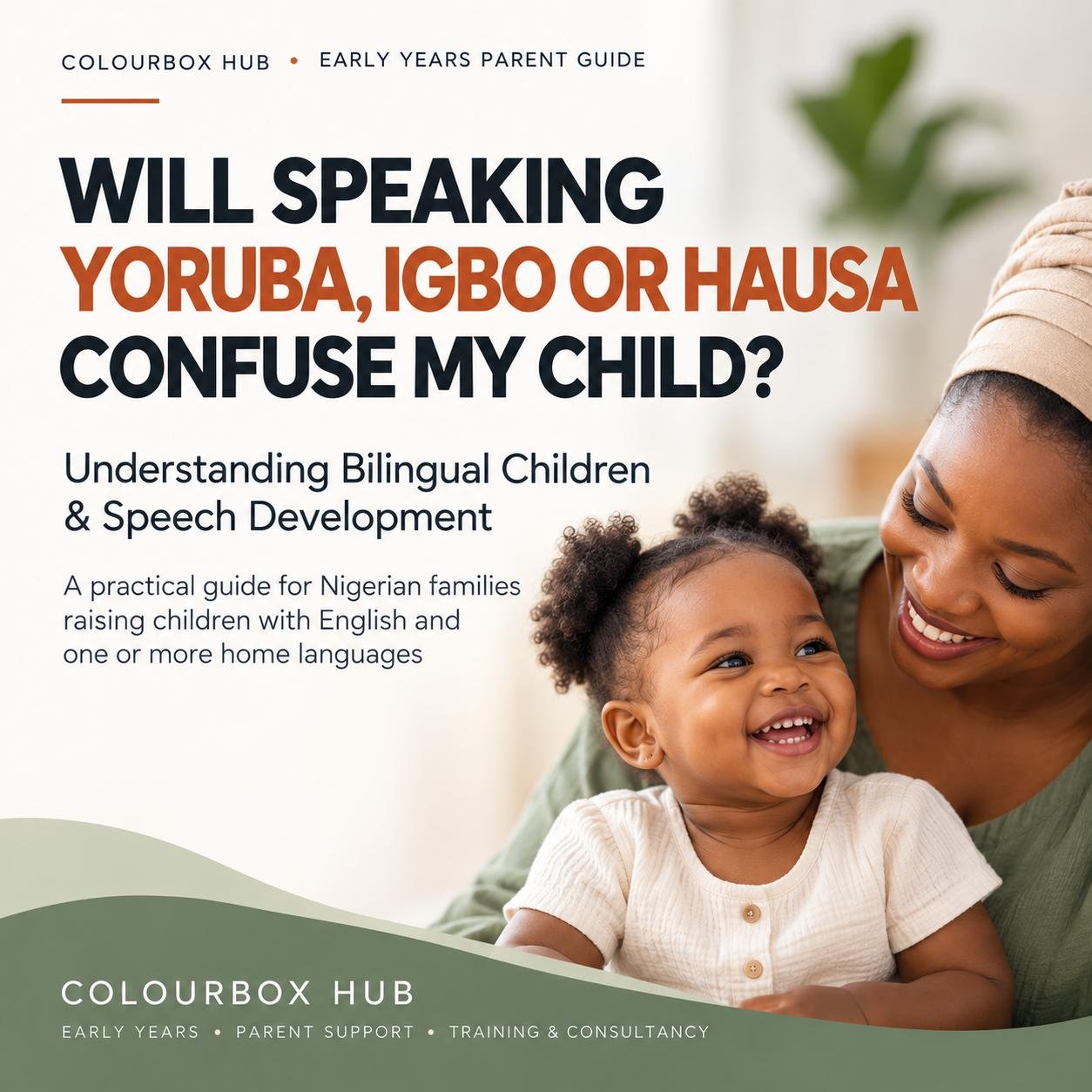
Will Speaking Yoruba, Igbo or Hausa Confuse My Child? – Understanding Bilingual Children & Speech Development
₦4,500.00
A practical, parent-friendly digital guide for Nigerian families raising children with English alongside Yoruba, Igbo, Hausa or another home language. Learn how bilingual children develop language, separate common myths from genuine communication concerns, and support both languages naturally.
Will Speaking Yoruba, Igbo or Hausa Confuse My Child?
Understanding Bilingual Children & Speech Development
“We speak our Nigerian language at home, but my child isn’t talking much. Should we stop and just speak English?”
This is a worry many Nigerian parents have — particularly when a child appears to be talking later than expected.
You may have heard family members, friends or others say:
“Just speak English so you don’t confuse the child.”
But is that really necessary?
Will Speaking Yoruba, Igbo or Hausa Confuse My Child? is a practical guide created especially for Nigerian families raising children with English alongside Yoruba, Igbo, Hausa or another home language.
The guide helps parents better understand how children learn more than one language and separates common myths from what we know about bilingual language development.
Inside this guide, you’ll learn how to:
- Understand how children learn and use more than one language
- Recognise the difference between bilingual language development and a genuine communication difficulty
- Understand what to look for as your child’s speech and language develops
- Support English alongside your home language naturally
- Understand why using two languages does not automatically mean your child is confused
- Feel more confident about using your family’s home language
- Create everyday opportunities for communication in both languages
- Involve grandparents and extended family in your child’s language development
- Recognise when your child may benefit from additional professional support
This guide is especially helpful if you’ve ever wondered:
“Am I confusing my child by speaking two languages?”
“Should we stop speaking Yoruba, Igbo or Hausa at home?”
“My child understands our language but answers in English — is that okay?”
“Could being bilingual be the reason my child is late to talk?”
“How can grandparents and extended family help?”
Your home language is more than just words.
It can connect your child to parents, grandparents, extended family, culture and identity.
You shouldn’t feel pressured to give up your family’s language simply because you’re worried about your child’s speech.
This guide gives you a clearer understanding of bilingual language development and helps you make more informed choices about the languages you use at home.
You’ll also learn what to watch for and when it may be appropriate to seek additional advice from a qualified speech and language professional.
Digital Ebook | Instant Access
₦4,500
BUY NOW — ₦4,500
🔒 Secure payment via Paystack • 📖 Access your ebook after purchase
Please note: This guide provides educational Early Years information and does not replace individual assessment or advice from a qualified healthcare or speech and language professional.
Related products
-
Speech & Language
Is My Child’s Communication on Track? – A Parent’s Guide to Speech, Language & Development
₦4,500.00 Add to cart -
Speech & Language
Is Screen Time Stealing Your Child’s Words? – A Parent’s Guide
₦4,500.00 Add to cart -
Speech & Language
50 Everyday Activities to Get Your Child Talking – FREE Bonus Ebook
₦0.00 Add to cart
Reviews
There are no reviews yet.